

Ouyang Erming: Rooted as a Cornerstone, Teaching with Rigor and Warmth; Aspiring for Growth, Nurturing with Light and Hope
发布时间:2026-01-16
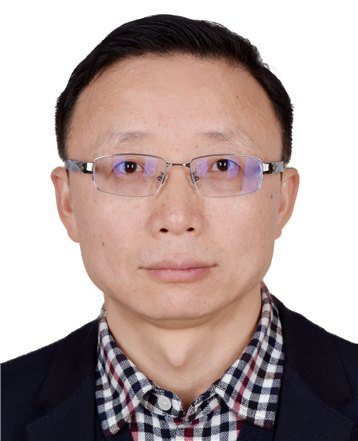
"New bamboos tower over old ones, all supported by the sturdy trunks beneath." On the inclusive and exploratory campus of the university, there is a teacher whose educational style is particularly touching. He always centers on students' growth, infusing rigor into every aspect of academic guidance—from the meticulous design of syllabuses, repeated refinement of thesis logic, to the strict verification of experimental data—laying a solid academic foundation for students with a truth-seeking attitude. Yet in daily life, he also acts as a warm companion: patiently guiding students when they are confused about their studies, and offering a helping hand when they encounter life difficulties, endowing higher education with both professional depth and humanistic warmth. Today, let us get to know this teacher who is "rigorous" in scholarship and "warm" in care. He is the Director of our School of Resources and Environmental Sciences, and a multiple award-winner in Teaching Innovation Competitions for Teachers—Ouyang Erming.
Upholding the Original Aspiration of Education to Stay True, Exploring New Horizons of Talent Cultivation to Forge Ahead
In the classrooms of the Water Supply and Drainage Science and Engineering major at Nanchang University, in the tackling of provincial and university-level teaching reforms, and on the stage of the National University Teachers' Teaching Innovation Competition, Teacher Ouyang Erming has always taken "upholding integrity and fostering innovation" as his rudder and "student-centeredness" as his sail, leaving a solid and brilliant trail on the voyage of higher education.
With years of dedication to teaching, his "integrity-upholding" is reflected in his relentless pursuit of teaching quality. From leading the provincial-level teaching reform project Curriculum Reform and Practice of Water Quality Engineering (Project No. JXJG-11-1-30, Completion Certificate No. JXJG-2013-401), to guiding his team to explore the "three-integration and three-coordination" talent training model from the perspective of emerging engineering education—he not only secured the approval of a university-level teaching reform project (NCUJGLX-2023-149-30) but also upgraded it to a provincial-level key teaching reform project (JXJG-23-1-6). Every research endeavor focuses closely on cultivating students' abilities, and every reform is rooted in the reality of professional teaching. The course Water Resources Utilization and Protection that he teaches has, by virtue of its high-quality teaching design and cutting-edge intelligent teaching model, successively been rated as a Nanchang University Undergraduate Characteristic Course, a University-level First-class Undergraduate Course, and an "Intelligent Course", becoming a high-quality course "with depth and warmth" in the eyes of students.
His "innovation" and strength have also shone brightly in various teaching competitions: he won the Second Prize in the 2nd Nanchang University Teachers' Teaching Competition in 2011 (Document No. Changda Jiaofa [2011] No. 32); the First Prize (highest level) in the 15th Batch of Nanchang University Teaching Achievement Awards in 2020 (Document No. Nanda Jiaohan [2020] No. 91); and 2025 marked an "explosive period" for his teaching achievements—he claimed the First Prize in the 5th Nanchang University Teachers' Teaching Innovation Competition in April, the First Prize in the Industry-Education Integration Group (including universities co-constructed by ministries and provinces) of the 5th Jiangxi Provincial University Teachers' Teaching Innovation Competition in May, and then the Third Prize in the same group of the 5th National University Teachers' Teaching Innovation Competition in August. These progressive honors have confirmed the value of his teaching innovation.
This teacher, who is rigorous and earnest in scholarship and gentle and enthusiastic in talent cultivation, always puts students' growth first. Let us now learn about the daily stories between him and his students.
Narrating the Original Aspiration of Education, Nurturing Students with Sincere Heart
Teacher Ouyang Erming embraces students with kindness and adopts flexible teaching methods, rooting education in the soil of growth. Students summarize his educational style with words like "kind", "flexible", "patient", and "teaching students in accordance with their aptitude".
These are the "essence of his education" accumulated over years of teaching. We often talk about "student-centeredness", but it has never been an empty slogan. "Kindness" means seeing students as "individuals", not just listeners in the classroom; "flexibility" means breaking the "confines" of teaching, preventing knowledge from being trapped in textbooks; "patience" means waiting for the "rhythm" of growth, allowing students to have confusion and make mistakes; "teaching students in accordance with their aptitude" means discovering the "shining points" of each student, enabling people with different foundations to keep up with the pace. The fact that students can perceive these qualities proves that he is on the right path.
"Kindness" is about seeing the "person". In university teaching, when facing adult students who seem independent but often encounter confusion in academic exploration and life choices, this "kindness" is particularly important. For example, when guiding a student from the Water Supply and Drainage major on their thesis, the student once suffered from insomnia due to anxiety caused by repeated errors in experimental data. Instead of criticizing his oversights first, Teacher Ouyang accompanied him to review literature and reflect on operational steps until the root cause of the problem was identified. After class, he would also take the initiative to talk to the student, telling him, "Scientific research progresses through trial and error—your earnestness is more important than a single success." When students are confused about their professional direction, he will recommend research topics based on their interests: those who are interested in environmental policies are guided to study water quality standards and regulations; those who are good at technical operations are arranged to participate in engineering practices. Essentially, this "kindness" is about respecting their emotions and safeguarding their passion for the profession.
His "flexible" teaching methods are also integrated into relatively theoretical courses such as Water Resources Utilization and Protection—a course that has been rated as a university-level first-class undergraduate course and an "intelligent course". Although this course requires theoretical support, it is more important to let students know "what problems knowledge can solve". For instance, when teaching "urban water-saving technologies", instead of just listing formulas, he takes students to visit local wastewater treatment plants in Nanchang, where engineers explain the application of water-saving equipment on-site. In class, he also sets up interactive sessions through the "intelligent course" platform, asking students to work in groups to simulate the "design of community water-saving schemes", and introduces the latest sponge city cases to help them see the connection between textbook knowledge and reality. A student once said, "I never knew water resources protection is not empty talk— the schemes we design could really help others." Hearing this, Teacher Ouyang knew that his "flexible" teaching had worked—it had given knowledge warmth and learning motivation.
"Patience" and "teaching students in accordance with their aptitude" are also reflected in the "three-integration and three-coordination" talent training model that he leads. The core of this model is "not letting any student fall behind". The major has students with diverse foundations: some are upgraded from junior colleges and are not familiar with engineering drawing; others have participated in competitions early and aspire to pursue a research-oriented path. For the former group, he offers "extra tutoring" after class, starting from basic software operation, and arranges study groups with top-performing students to provide assistance. For the latter group, he recommends them to join provincial-level teaching reform projects and participate in the practice of curriculum reform of Water Quality Engineering, allowing them to get early exposure to scientific research thinking. A student with a relatively weak foundation, through two years of targeted guidance, not only graduated successfully but also was admitted to a postgraduate program in environmental engineering. In fact, "patience" means building the "ladder" for them, and "teaching students in accordance with their aptitude" means helping them choose the right "ladder"—only in this way can everyone move forward.
Behind these honors, from the University-level Teaching Achievement First Prize to the National Teaching Innovation Competition Third Prize, the driving force that supports Teacher Ouyang's continuous exploration is students' growth. Last year, a graduate returned to the university and shared that he had used the "water quality testing methods" learned in class to solve practical problems for his company and gained recognition from his superiors. Another student, after winning an award in a competition, came to share the joy with him immediately. These moments are more precious than any honor—all teaching reforms and talent cultivation attempts are ultimately aimed at enabling students to face challenges with confidence and ability after leaving campus. This is probably the happiest "sense of accomplishment" for a teacher.
Conclusion
Looking back on Ouyang Erming's path of nurturing talents, "kindness" is the warmth with which he treats students, "flexibility" is the ingenuity with which he enlivens the classroom, "patience" is the foundation with which he guards their growth, and "teaching students in accordance with their aptitude" is the wisdom with which he ignites their individuality. Just as the poem goes, "It falls softly with the wind into the night, moistening everything silently." He embodies these qualities in the details of teaching—from thesis guidance to curriculum innovation, from competition support to after-class care. By adhering to integrity and pursuing innovation, he practices "student-centeredness", allowing the power of education to quietly nourish the future of every student.

 0791-83969583