

Zhan Jian
发布时间:2026-01-31
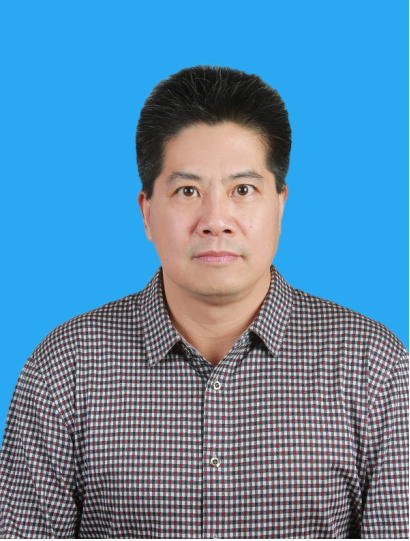
Personal information
Zhan Jian
Professor, Head of Municipal Engineering Discipline, Doctoral Supervisor
Email: 1243871232@qq.com
School of Resources and Environmental Engineering, No. 999 Xuefu Avenue, Honggutan New District, Nanchang, Jiangxi Province, P. R. China
Educational Background
· September 1992 – March 1995: Master of Engineering in Environmental Engineering, Tongji University; supervised by Professors Gao Tingyao and Zhou Zengyan
· February 1987 – July 1988: Advanced study in Water Supply and Sewerage Engineering, Department of Civil Engineering, Hunan University; supervised by Professor Li Guochang
· September 1982 – July 1986: Bachelor of Engineering in Water Conservancy and Hydropower Engineering, Department of Civil Engineering, Jiangxi University of Technology (now Nanchang University)
· September 1980 – July 1982: Zixi County No. 1 High School, Jiangxi Province
Professional Experience
· July 1986 – Present: Engaged in teaching, scientific research and student administration at Nanchang University
· September 1988 – March 1990: Engaged in engineering design at Nanchang Nonferrous Metallurgy Design Institute (now China Nerin Engineering Co., Ltd.)
Academic and Social Appointments
· Executive Director, Water Supply Committee, Jiangxi Provincial Municipal Public Utilities Association
· Senior Consulting Expert, Jiangxi Provincial Engineering Consulting Association
· Expert Judge for Bidding of Construction Projects in Jiangxi Province
Research Interests
He is mainly engaged in teaching and research on urban and rural water supply safety guarantee technology, sustainable development of urban water use, and new water treatment technologies. In recent years, he has presided over 4 scientific research projects at or above the provincial level and nearly 80 technical service projects.
He has achieved a series of research results in high-efficiency utilization of water resources, water supply safety technology, nitrogen and phosphorus non-point source pollution control technology for Poyang Lake, and rural drinking water safety technology, which have been widely applied in rural drinking water safety projects in Jiangxi Province. He has published 1 monograph and more than 60 academic papers as the first author or corresponding author in important domestic and international scientific journals.
Research Profile
With the urbanization around Poyang Lake, rainfall runoff carries a large amount of nitrogen and phosphorus pollutants into receiving water bodies and eventually converges into the Poyang Lake Basin, aggravating eutrophication. Meanwhile, due to outdated drainage pipe networks and improper/misconnected rainwater and sewage pipes in some cities, a large amount of untreated urban sewage overflows into the Poyang Lake Basin through intercepting wells. Therefore, research on water resources and water security guarantee of the Poyang Lake Basin is imperative.
1.Eutrophication in the Poyang Lake BasinSource control is adopted, and sponge city optimization measures (Low Impact Development, LID) are used to control non-point source pollution caused by nitrogen and phosphorus in the basin, so as to alleviate lake eutrophication. It promotes a sound hydrological cycle in the Poyang Lake Basin and surrounding cities from the perspective of water quality safety, to better protect and utilize the ecological service functions of Poyang Lake wetlands.
2.Urban Combined Sewer Overflow PollutionBased on field surveys of rainwater and sewage pipe networks in cities around the Poyang Lake Basin (Poyang, Yugan, Duchang, etc.), MIKE models are constructed to analyze and evaluate the flow capacity of existing pipe networks. Corresponding technical solutions for pipe network renovation are proposed to reduce pollution hazards to Poyang Lake caused by sewage overflow under extreme weather.
3.Urban-Rural Water Supply IntegrationAs a public facility construction field highly concerned by national policies, urban-rural water supply integration mainly extends urban water supply networks to towns and villages, establishing an integrated water supply network system. It basically realizes interconnected water supply and shared water resources between urban and rural areas, improves water resource utilization efficiency, and enables urban and rural residents to share high-quality water.
Courses Taught
· Sewerage Engineering
· Water Pollution Control Engineering
· Introduction to Water Supply and Sewerage Engineering
· Instruments and Control in Water Engineering
Awards and Honors
1. Third Prize of the 2013 Ganpo Water Conservancy Science and Technology Award for Practical Technology for Design of Rural Drinking Water Safety Projects in Jiangxi Province
2. Honorary Title of Guardian with Glorious Devotion to Education for More than 30 Years – Education Working Committee of Jiangxi Provincial Party Committee and Department of Education of Jiangxi Province, 2016
3. Advanced Individual in Social Services – Nanchang University, 2017, 2013 and 2010
Representative Achievements
1. Yu X, Zhan J, Xu C, Liu Z H, Shi F P. Research progress on influencing factors of rainwater runoff storage and pollution interception in dry grass swales [J/OL]. Applied Chemical Industry: 1-7 [2022-05-07].
2. Xu C, Wang L, Liu Z, et al. Nitrogen and phosphorus removal efficiency and algae viability in an immobilized algae and bacteria symbiosis system with pink luminescent filler [J]. Water Science and Technology, 2022, 85(1): 104-115.
3. Xu C, Liu Z, Cai G, et al. Nutrient leaching in extensive green roof substrate layers with different configurations [J]. Environmental Science and Pollution Research, 2022: 1-10.
4. Zhang C Z, Zhan J, Xu C. Current situation analysis of pollution interception effect of green roofs on rainwater runoff [J]. Guangdong Building Materials, 2021, 37(09): 76-78.
5. Xue Z Z, Li L W, Chen Y H, Hu J J, Wang L P, Xu C, Zhan J. Study on return period connection relationship of two-stage system based on design discharge [J]. Water Resources and Power, 2021, 39(08): 50-53+30.
6. Wang L P, Xue Z Z, Chen Y H, Hu J J, Xu C, Zhan J. Study on domestic sewage treatment by chlorella with luminescent filler [J]. Applied Chemical Industry, 2021, 50(07): 1833-1837.
7. Xu C, Liu Z H, Cai G J, Zhan J. Study on benefits of rainwater runoff storage and pollution interception of substrate layers with different ratios [J]. Environmental Science & Technology, 2021, 44(04): 72-79.
8. Liu Z, Jiang Z, Xu C, et al. Assessment of provincial waterlogging risk based on entropy weight TOPSIS–PCA method [J]. Natural Hazards, 2021, 108(2): 1545-1567.
9. Liu Z, Xu C, Cai G, et al. Experimental evaluation of the rainfall retention and inorganic pollutant mitigation effect by dual-layer and polyacrylamide-modified green roofs [J]. Environmental Science and Pollution Research, 2021, 28(46): 65160-65170.
10. Xu C, Liu Z, Cai G, et al. Experimental study on the selection of common adsorption substrates for extensive green roofs (EGRs) [J]. Water Science and Technology, 2021, 83(4): 961-974.
11. Xu C, Zhan J, Hu J J, Wang L P, Chen Y H, Xue Z Z. Research progress on influencing factors of rainfall retention and pollution interception effect of extensive green roofs [J]. Environmental Engineering, 2020, 38(09): 76-81.
12. Xiang N, Li L W, Zhan J, Jiang Z Z J, Zhou J K. Study on the influence of catchment division methods on hydrological simulation results under model analysis [J]. China Rural Water and Hydropower, 2020(04): 87-91.
13. Li L W, Zhan J, Jiang Z Z J, Xiang N, Zhou J K. Volume determination of initial rainwater detention tank for separate system aiming at runoff pollution control [J]. Water Resources and Power, 2020, 38(01): 17-20.
14. Xu C, Liu Z H, Cai G J, Zhan J. Experimental Study on the Retention and Interception Effect of an Extensive Green Roof (GR) with a Substrate Layer Modified with Kaolin [J]. Water, 2020, 12(8).
15. Jiang Z Z J, Xiao C Y, Li L W, Zhan J. Study on the influence of detention tank scale on initial rainwater interception effect and hydrological parameters of intercepting pipes [J]. China Rural Water and Hydropower, 2019(11): 15-21+27.
16. Xiong Z Y, Xiao C Y, Cai T, Zhan J. Volume determination of initial rainwater detention tank and simulation of pollution interception efficiency based on SWMM [J]. Water Resources and Power, 2019, 37(01): 36-39.
17. Cai T, Li X Y, Ding X, Wang J, Zhan J. Flood risk assessment based on hydrodynamic model and fuzzy comprehensive evaluation with GIS technique [J]. International Journal of Disaster Risk Reduction, 2019, 35.
Note: The author is the corresponding author for all the above publications.

 0791-83969583